
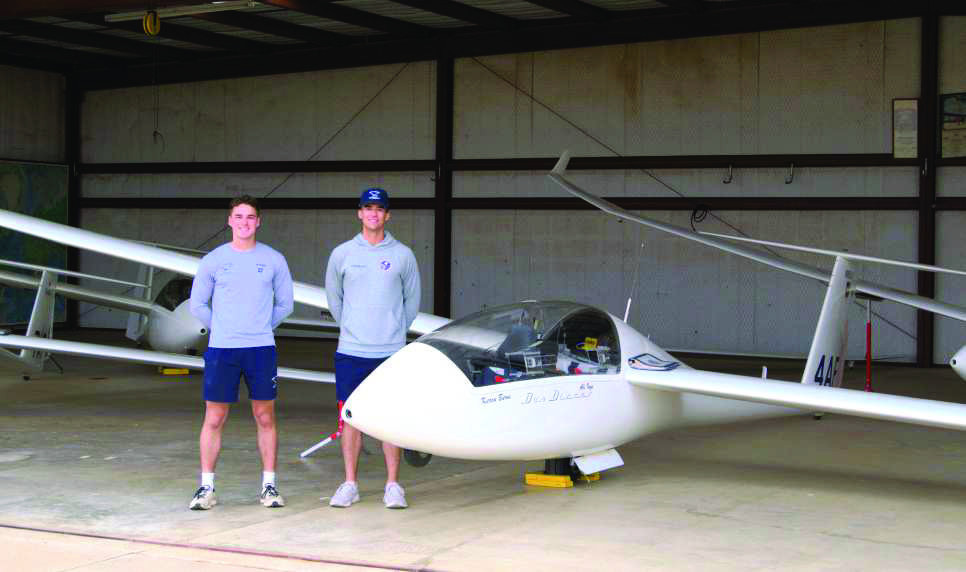
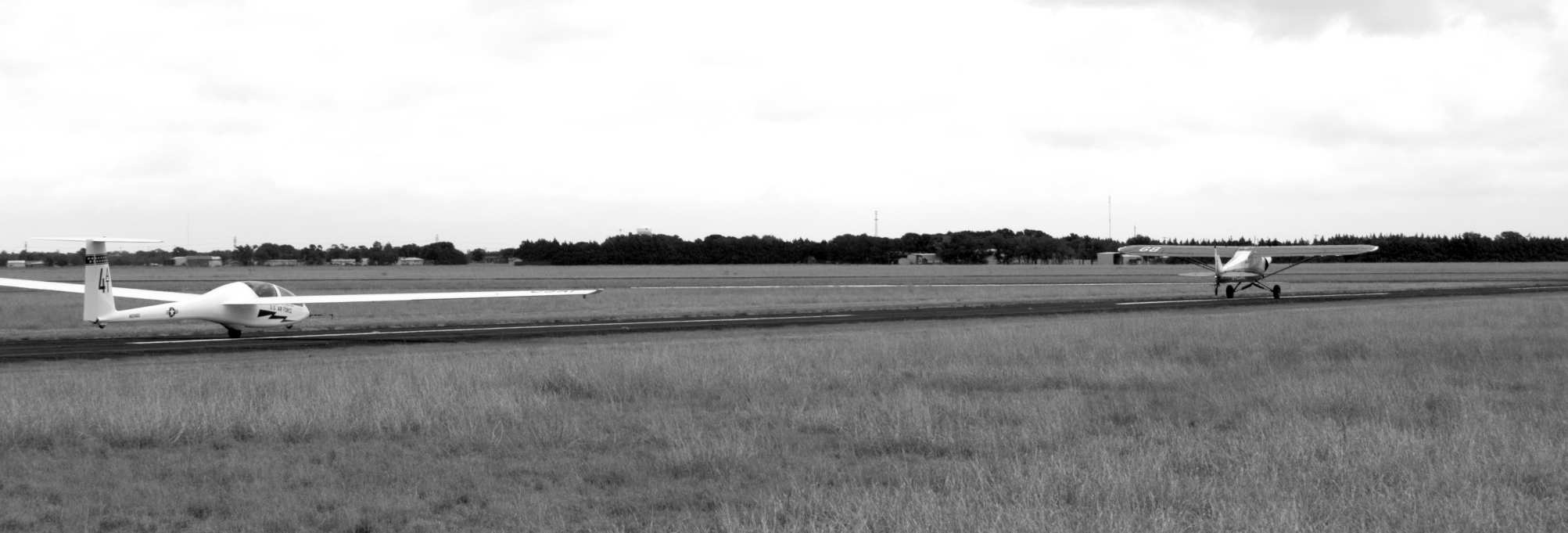
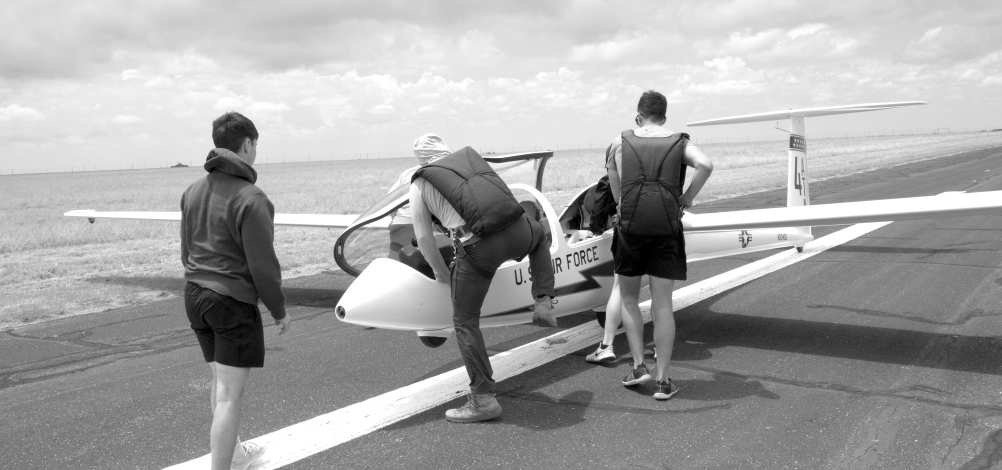
Air Force Academy cadets are continuing a nearly 40-year-old relationship with Littlefield, TX, returning to the Littlefield Taylor Brown Municipal Airport and Industrial Airpark for their annual training.
The program brings cadets to Littlefield each year to develop cross-country soaring skills, using the area’s beneficial terrain and weather conditions to prepare for more advanced flying.
Major Emiliano Kaptain, director of advanced soaring at the U.S. Air Force Academy, has been coming out to Littlefield for these training sessions for the past two years. Kaptain says that he continues to return because of the environment and community support.
“We’ve been coming here for over, I think, 40 years at this point, on and off, and it’s just an excellent location for our training. The community has always had its arms, you know, wide open for us, and we really love coming down here,” said Kaptain.
During the training period, cadets will work toward qualifying in multiple kinds of glider aircraft while learning how to navigate long-distance flights using only air currents and weather patterns.
The training focuses on younger cadets, primarily those moving into more advanced stages of the program.
Creed Thompson has been flying for four years and is now a cadet instructor pilot on the Academy’s sailplane racing team. Thompson says that the goal is to introduce cadets to cross-country flying and prepare them for more complex situations.
“So the purpose of this camp is usually to complete our cross-country syllabus. So we take in new cadets who are sophomores, about to be juniors, and we’ve just brought them on to the team. And now we’re introducing them to crosscountry,” said Thompson.
Thompson also added that cadets will progress and move from flying with instructors to navigating routes between multiple airports across the region, and eventually begin flying on their own.
They also practice precision and obstacle landings, along with thermaling, which allows gliders to gain altitude using rising air.
Because gliders do not use engines, cadets must constantly adjust to changing conditions mid-flight, making decision-making a crucial part of the training.
Matt Withers is a rising senior and instructor pilot, who says that ability is one of the most important skills a cadet can take away from the entire experience.
“I think decision-making is the number one, like, best
AIR FORCE, Continued on Page 2 thing you can learn here. different airports, different conditions that are always changing, and up to you in the plane to decide whether or not you’re going to land out, you know, come back, thermal, give a huge, like, a lot of decisions to make, and you gotta make the right ones at the right time,” said Withers.
Littlefield also provides an ideal training environment, with its flat terrain and relatively low air traffic, allowing cadets more time to practice flying and offering safer landing options.
“The flat terrain in the fields around us allow us that if something goes wrong or the weather falls out for some reason and we need to divert or what we call a land out which would be landing in a field. There’s a lot of places that are suitable for that, which makes it helpful whenever we’re training our cadets and our officers,” said Thompson, adding that those conditions make it easier for cadets to focus on learning and adapting in real time.
In addition to flight training, cadets use a mobile operations center they have nicknamed the “ barrel wagon,” equipped with a simulator to continue practicing when weather conditions prevent flying.
After completing training in Littlefield, the team will return to the Academy to teach new cadets before transitioning into the competition season in late June and beginning their journey through Hobbs, New Mexico; Reno, Nevada; Truckee, California; and other cities.
While competition is part of the program, instructors say the primary focus remains on building skills that cadets will carry forward in their training and future careers.