
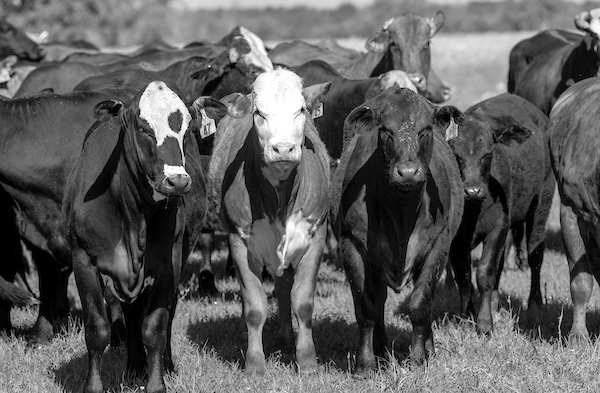
Cattle prices still have room to go up, said a Texas A&M AgriLife Extension Service expert.
With smaller supplies of cattle on hand and good demand for beef continuing, prices could hold and go higher yet, said David Anderson, Ph.D., AgriLife Extension livestock marketing economist and professor, Texas A&M Department of Agricultural Economics, who spoke at the Texas A&M Beef Cattle Short Course.
“We are going to produce less beef this year and next year and maybe into 2028,” Anderson said. “We can’t expand the herd in a drought, and the whole Great Plains area has been and is still dry. Expansion is going to happen slowly due to the drought, higher input costs and interest rates, and the market volatility — tariffs, trade, screwworm and other pests — we are still seeing.”
Expansion might be starting, but takes time
Anderson said the slow movement to herd expansion means increases in beef production will also be slow.
“One way to increase beef production will be the cattle from Mexico, with the planned border openings later this month,” he said. “But that will also depend on the speed of the port openings and the number of cattle coming into the U.S.”
The Santa Teresa, New Mexico, port west of El Paso is the largest entry point for Mexican cattle, with more than 500,000 head moving through annually. That port will be the second or third of the various ports to open, with the Douglas, Arizona, port opening first.
“We’ll start importing feeder cattle; my expectation is it will slowly ramp up, and we won’t get as many as we were in 2024 and before,” Anderson said. “These numbers will add to our supply of feeder cattle, but it won’t really depress prices. We’re still going to have high prices.”
That’s because those cattle won’t become beef in the store until mid-2027. So, Anderson said, not much impact is expected on prices in the near term.
In the market
Calf prices will still have room to go up, he said.
“We will have tighter supplies with good demand, and that’s a recipe for higher prices,” Anderson said.
Anderson said fed cattle are selling for an average of $230 per hundredweight now, but by next quarter, they could move to $243$245 per hundredweight. In 2027, that price could go as high as $250-$256 per hundredweight. Prices for lightweight cattle or feeder calves, 500-600 pounds, have dropped slightly in the past few weeks, from $476.24 to $437.44 per hundredweight, but are expected to climb back as high as $459-$467 per hundredweight in the second quarter of 2027.
He said producers have stopped culling cows as much as they were, but they haven’t been holding back heifers.
“Right now, their dilemma is ‘do I sell the heifers today and get good money or hold the heifers and count on their offspring to make me money?’” Anderson said. “For the most part, the check in hand has been more attractive than the check from future offspring.”
The U.S. Department of Agriculture July cattle report indicated 100,000 heifers had been held back, so that is not huge, he said, but it is an indication that the process has started.
“It’s hard to grow a herd if you don’t keep numbers back,” he said. “However, the trend on the beef side is more pounds of beef per head, so we don’t have to have as big of growth to get back to the same supply as before.”
AgriLife Extension district reporters compiled the following summaries: Panhandle
Hot, dry conditions dominated the district, with daily highs exceeding 100 degrees in several areas and one county reporting 104 degrees. Topsoil and subsoil moisture levels ranged from very short to adequate. Rainfall was minimal and spotty, with amounts generally under a quarter of an inch where it fell. Dryland sorghum was struggling, and some producers had already turned fields in to crop insurance. Dryland sorghum fields showed more widespread mid-season disease pressure than irrigated fields, and growers were electing to harvest forage from some of the most affected acres rather than continue watering. Most cotton fields were on the fast track for flowering and boll development, with many already reaching cutout. Pasture and rangeland were in very poor to good condition. Livestock conditions ranged from very poor to good across the district.
South Plains
Extreme heat gripped the district, with temperatures in the triple digits for more than a week in some areas and heat advisories in effect. Topsoil and subsoil moisture ranged from very short to adequate. Scattered rainfall ranged from trace amounts to 2.26 inches, and hail accompanied the storm system in some areas and damaged crops. Dryland cotton was showing heat stress, wilting and shedding squares in some fields, while irrigated cotton was hanging on where producers could irrigate. Cotton growth was behind schedule but still had a chance to make a good crop if heat units and weather cooperated over the next two months. Irrigated peanuts were pegging and setting pods well, with no larval feeding noted. Corn leafhopper was present and threatening late- planted corn, while grasshoppers and mites were the top concerns elsewhere. Some producers were letting sorghum go in order to concentrate irrigation on cotton and corn. Early silage chopping was reported. Native pastures were drying up, and supplemental feeding of cattle increased. Pasture and rangeland were in very poor to fair condition.
Rolling Plains
Another dry, extremely hot week pushed crop and pasture conditions into decline across much of the district, with 100-degree temperatures and missed rain chances. Topsoil and subsoil moisture ranged from very short to adequate. Pastures were burning up and going dormant. In some areas, the dry grass was becoming a fire hazard. Cotton was mostly holding on but was stressed, and many acres of the hay crop were suffering. Corn and sorghum harvest was wrapping up in the eastern portion of the district, with reports of above- average yields. Hay had been made in volume earlier in the season, but much of the early hay was rained on and quality suffered. Producers were sitting on large surpluses at prices well below breakeven. Livestock were in good condition where grazing remained, but producers in the driest areas were making plans to cull breeding animals. Sunflower fields were expected to go in shortly for a Sept. 1 planting date. Pastures and rangelands were in very poor to good condition.