
WEST PLAINS IPM UPDATE
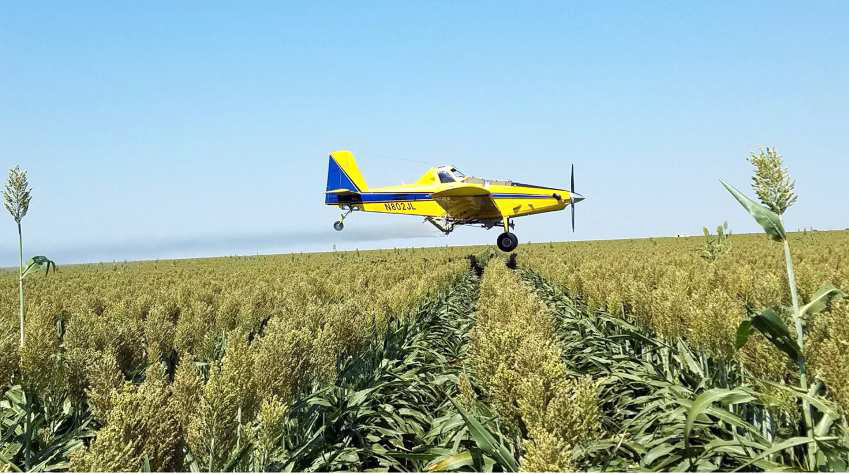

Grain sorghum ranges from nearing harvest on early planted to just near boot. Those acres which have not headed yet I would be extremely conservative on what I spend on those acres. It will be cutting it close to have time to mature out. I feel confident in those acres which are at or very near flowering that they have time and are worth protecting from sorghum aphids and the head worm complex. The change in weather here the last week or so, has also changed the pest pressure. I am still concerned about sorghum aphids, but they just do not seem to be getting outof- hand (that is a technical term) in these later fields like we would normally expect. Trust me though, do not turn your back on them, and YOU MUST SCOUT! Sorghum midge have not been that common on flowering sorghum. This late grain is prime candidate though for midge. Those fields which are post flowering need to also be scouted for head worms. I am also finding an occasional Lygus and stink bugs in sorghum heads as well. Consider them when and if you check heads. Call if questions on scouting, threshold, and treatment options.
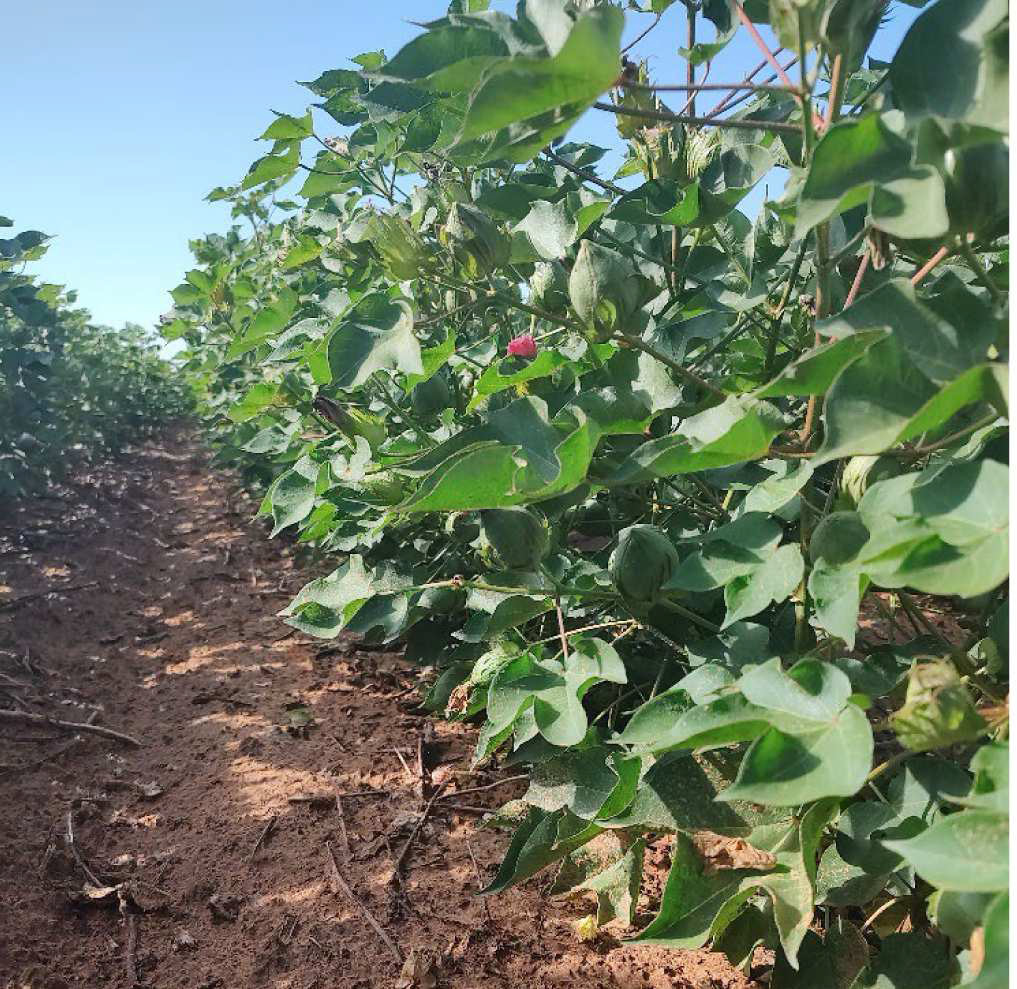
Cotton ranges from just emerged dryland corners which received these recent rains, to having 6 nodes above cracked boll. I have not seen any insect pest that cause me concern this last week. I mostly will be keeping an eye out for cotton aphids, which I am not finding, for the next few weeks. All irrigation is off as far as I am aware. Right now and depending what the weather holds over the next two weeks I am not anticipating turning any water back on. Just remember that a cotton boll can take moderate stress when it is 20 days old. Moderate stress is plant will wilt in heat of day, but fully recovers after sundown. So, if we set the last harvestable boll around August 12th, that boll is 21 days old today. When that boll is 45 days old the plant can go into permanent wilt and not impact the quantity or quality of that which have not headed yet I would be extremely conservative on what I spend on those acres. It boll. So, we want to keep moisture available to the plant through approximately September 26. The cotton plant is still using near 0.2” of water per day for a few more days, and then it continues to drop over the next 3-4 weeks. If you received a 2” rain this last rain event that will keep cotton fresh for ~12 days. There was probably 3-5 days of moisture present in the soil from previous rain or irrigation. Odds are between now and the 26th of this month we receive some additional moisture. Most likely we will be covered on our cotton water needs.
There have been some minor changes to the cotton harvest decision budget spreadsheet, and it is now posted to the main Lubbock Center website: https://lubbock.tamu.edu/files/ 2022/09/2022-Cotton-Harvest-Decision-Budget.xls
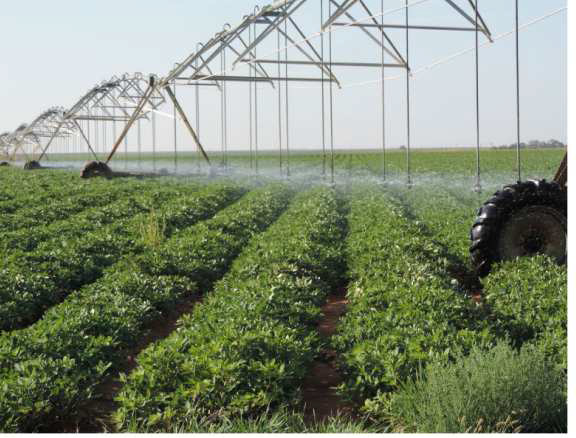
peanuts I am not concerned now with foliage feeders or other insect pests. The incidence of foliar disease has been very low this summer but has become much more concern with this recent weather. Be careful about the development of leaf spot and other above and below ground disease. I have seen some onset of black hull here this week. Understand, there is not much one can do about this. The goal now is to maintain vine health and keep pods maturing out. I think we are still a way out from digging, but I would start scrapping hulls here next week to see how it is progressing. Irrigate only as needed to keep peanuts fresh until dug with little stress. West Plains IPM Update is a publication of the Texas A& M AgriLife Extension Service IPM Program in Hockley, Cochran, and Lamb Counties. Editor: Kerry Siders, Extension Agent-IPM Contact information: 1212 Houston St., Suite 2 Levelland, TX 79336 (806) 894-3150 (office),