
WEST PLAINS IPM UPDATE
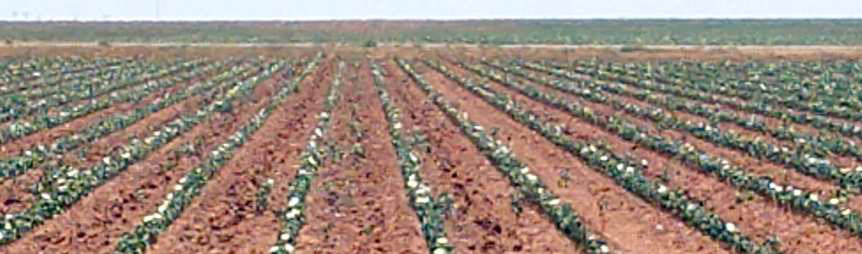
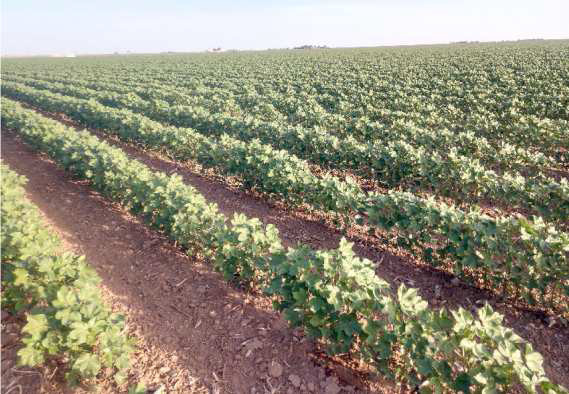

There are a few pockets (all sub-threshold) of cotton aphids, spider mites, a few bollworms, and Lygus in Hockley, Cochran, and Lamb counties. However, in the scope of things we could say that insects are a very low priority. Weeds may still be on a list of concerns for some but are also low priority. This would apply to most any crop. I am just not seeing insect, disease or weed issues which come close to the concern about WATER.
The past couple of weeks the attempt has been made in this newsletter to help give some management suggestions on irrigation. Discussions about use of nodes above white flower, knowing when a boll can take a certain amount of stress based on boll age, and even encouraging the diversion of water to fewer acres. Here we are on August 4 and many producers are up against the wall in not being able to provide the necessary amount of moisture to finish out this crop. Some are faced with still having some water but do not want to make a bad investment in applying irrigation water to a crop which will not return that investment.
If irrigation water is not there you have no choice, shut it off for the season. If you are still able to pump water here is a suggestion that I will throw out there based on average number of bolls per row foot. If you have 5 or less bolls per foot (approx. 165 lbs. lint/ac) shut the water off. If you have 10 bolls per foot (approx. 330 lbs. lint/ac) shut the water off around August 10th. If you have 15 bolls per foot (approx. 495 lbs. lint/ac) shut the water off around August 15th. If you have 20 bolls per foot (approx. 660 lbs. lint/ac) shut the water off around August 20th. And finally, if you have +25 bolls per foot (approx. +825 lbs. lint/ac) shut the water off around August 25th. So, I simply throw this out there based on what I see in the field. The relation of number of bolls on plants to the ability of an irrigation system to get it to this point in the season is important. Knowing also that the fewer bolls per foot of row will require less time and water to mature out but most importantly will return less. In all these scenarios you may not be able to continue watering for as long as I suggest because the wells may not hold up. No choice, shut it down. On the other hand, and especially as you get over the 1 bale potential, the longer you can go until those bolls are of sufficient maturity (use the knife method of cutting bolls and find seed coat) the better off you are. I will be glad to come look at a field with you on these decisions. And lastly, know that once you turn the water off these fields will most likely go into permanent wilt. Hopefully temperatures will moderate, and rains will be received. Good luck.
Using our IPM scouting fields as a representation of the area cotton crop, we see that 60% of fields have reached physiological cutout (<5 NAWF) this week. For those fields we need approximately 350 DD60 more heat units to accumulate to be safe from bollworms. With the current weather trend of +20 heat units per day, those fields which have reached cutout should be safe from bollworms around August 21. The remaining 40% of the cotton acreage has such a wide range of maturity levels that it would be difficult to be as certain of when it will be safe from worms. I would approach these later maturing fields from this angle. We historically say our last effective bloom date is August 15th. This is a date in which a boll can be formed, have time to mature, and contribute to yield. Therefore, if we continue with this weather pattern into September, and we are accumulating 20 HU/day, we can add 17 days to this date. Thus, would give us a target of September 1 for those late fields needing to be scouted and protected from worm issues. The point being is that NAWF is an important gauge of maturity and can help project time needed to be safe from worms and manage irrigation.
Currently, bollworms are just beginning to be found infesting area fields and need to be scouted, particularly those varieties with lesser than Bollgard II or no Bt technology. Lygus, stinkbug, cotton aphids and mites should be included in those scouting procedures. Cotton aphids have been the most common insect. To-date beneficial insects as lady beetles and lacewing have keep up and cleaned up most of the infestations. Remember, cotton aphids thrive in skippy cotton, and late nitrogen. Late nitrogen can also delay cotton maturity. For more information on managing cotton insects in Texas go to: https://lubbock.tamu.edu/files/ 2022/ 07/ managing- cotton- insects- in-texas.pdf My priority list for the rest of August, and going into September: 1. Keep close watch on cotton bollworms, larva pests in general, cotton aphids and Lygus. Scout, apply economic threshold, and act on good information.
2. Continue with late season weed control: residual herbicide, cultivate, hoe, whatever it takes to keep the pigweed from going to seed. It is a numbers game.
3. Do the best you can to keep up with water demands of the cotton.
West Plains IPM Update is a publication of the Texas A& M AgriLife Extension Service IPM Program in Hockley, Cochran, and Lamb Counties. Editor: Kerry Siders, Extension Agent-IPM Contact information: 1212 Houston St., Suite 2 Levelland, TX 79336 (806) 894-3150 (office), 638-5635 (mobile), or 897-3104 (Fax) ksiders@tamu.edu (E-mail)
KERRY SIDERS