
Cotton has not caught much of a break from this hot dry weather the last few weeks. Irrigation applications are critical at this time when the cotton plant is still near peak water use for a while longer. This brings up an important point. We are nearing the end of the blooming cycle and creation of bolls. Over the next 7-10 days we will be at the end of when a bloom can result in a harvestable boll. From this point forward it is all about retaining those bolls, achieving good size for yield and good quality.
Always remember that we are dealing with a perennial plant in cotton. Any late growth will not have time to contribute to yield and in fact can detract from what is already there. Also, a growth regulator cannot fix that situation. Along these lines, and to support what my point is here, we are now seeing the adjustment in fruit load in some fields. This adjustment causes squares and young bolls, less than 5–7-day old, to be shed from the plant. This is a natural process which occurs (of course make sure it is not insect induced) when the holding capacity of the plant has been reached.
That capacity is set by the plant which has been developed, soil nutrients, soil moisture, production of carbohydrates within the plant etc. Based on those parameters the plant can produce only so much, until something changes. When these changes, like a big influx of soil moisture (or late fertilization), occur late it can cause the plant to resume vegetative growth. This directs energy into creating additional nodes, stems, leaves, and subsequent squares. This late growth will run out of heat units before it can develop into good contributing mature bolls. So, be careful in any inputs provided and how the plant will react to those inputs.
Cotton aphids have attracted much attention. We have had an ideal situation for aphids – skippy stands, maybe late N applications, etc. However, between beneficial insects and this heat most aphid populations are being held in check. YOU MUST SCOUT THOUGH TO BE CERTAIN! The heat has also suppressed worm activity in general, not just in cotton but other crops as well.
In grain sorghum the sorghum aphid (aka. sugarcane aphid) has been present in some fields.
Again, you must scout each field. No blanket generalizations here.
WEEDOFTHEWEEK
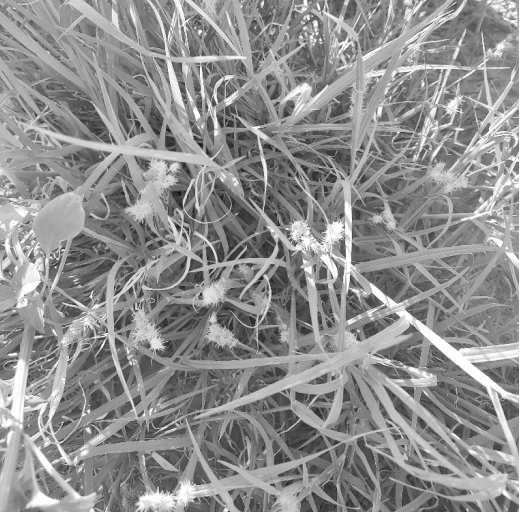
Sandbur, Cenchrus spinifex Cav. Poaceae (Grass) family
• Annual or perennial life cycle.
• Grassy weed with burs with a spike-like inflorescence that contains sharp, painful spines that can get caught on clothing, pets, animals, etc. Annual (C. echniatus) and perennial (C. spinifex) species are both common in Texas.
• This weed is especially adapted to dry, sandy soils but can be found growing in other types of soils as well.
• The big problem with this weed is the sharp, spiny burs that are part of the inflorescence.
• These burs can be painful and are difficult to remove from clothing material.
• Field sandburs (grassburs) generally start germinating in late spring and will continue to germinate until late summer or early fall months.
• This weed will continue to grow until the first hard frost or freeze occurs in the fall.
***** West Plains IPM Update is a publication of the Texas A&M AgriLife Extension Service IPM Program in Hockley, Cochran, and Lamb Counties.