
CURRENT SITUATION–
Cotton ranges from just emerged to 8 true leaf squaring cotton (average is 4.5 true leaves). This wide range is reflective of the mess we have been in across a large area here on the West Plains. I cannot review all the scenarios which have played out over the last 5 to 6 weeks during planting. Just suffice to say that it has been a real struggle for most to have a good stand. We sure could use calm, little to no winds, a nice gentle rain this coming weekend, and temperatures in the 65 to 95 range. Not asking much, but that is my prayer.
Scouting this last week found very little insect activity. We have noted a few grasshoppers along field edges and associated with heavy wheat cover. Also, I can find fleahoppers and very few Lygus in weedy field margins, mostly in bar-ditches. I will be concentrating my efforts the next few weeks on monitoring square development, retention, and detection of any square robbing pests, such as fleahoppers.
Weed control is all over the board. Unfortunately, this is a field-by-field prescription situation now in terms of technology in the plant, if you plan on using any tillage in- season, weeds present, the size of those weeds, and available equipment. I must say that although pigweed is resistant to glyphosate (Roundup), it is still very effective against many and most all other weed species.
To-date Liberty has been working well when we had some humidity to work with.
Peanuts are generally doing well with some fields beginning to bloom. Maintain a moist environment in-canopy is difficult in high temperatures and windy conditions. The high humidity is necessary for blooms to pollinate and subsequently form pegs/pods. Evaluating fields for nodule formation is a critical step in determining the effectiveness of your inoculation process at plant. If nodulation is poor or inconsistent then you will need to plan on compensating with additional fertilizer applications. Priority now is clean up weeds, complete any cultivation in next couple weeks, and irrigate.
Corn is generally doing well where sufficient irrigation is available. Watch for mites in this current environment.
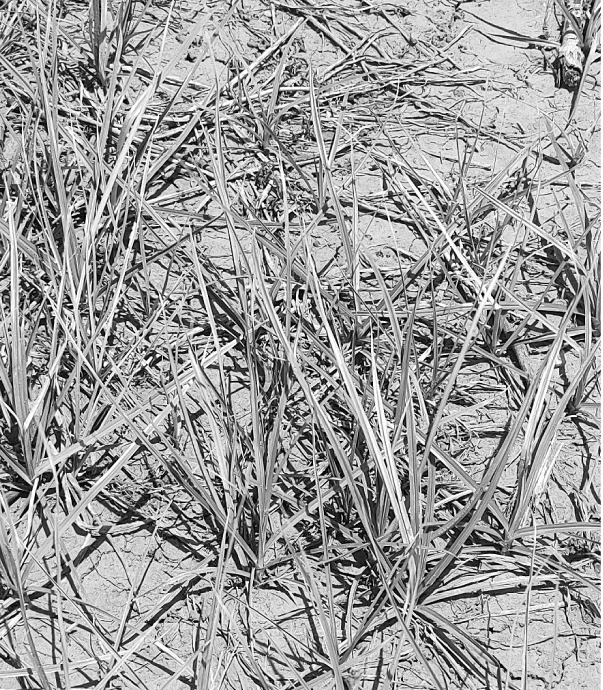
Grain sorghum is being planted now behind failed cotton and even some first plantings. Those earlier plantings have not seen much insect issues. Again, weed control is top priority. To reduce the risk of crop injury, Clarity (dicamba) or 2,4-D should be applied after all sorghum has emerged but before the height exceeds 8 to 10 inches. Yellow Nutsedge, aka Nutgrass Cyperus esculentus *Yellow nutsedge is not a grass or broadleaf weed, but a sedge; the stem is three sided.
*It is a perennial plant. *Has small underground tubers called nutlets.
*Yellow nutsedge nutlets are formed singularly, versus purple nutsedge the nutlets are formed in a chain.
*Seeing more nutsedge today than let’s say 10 years ago most likely due to producers not using glyphosate as often.
***** West Plains IPM Update is a publication of the Texas A&M AgriLife Extension Service IPM Program in Hockley, Cochran, and Lamb Counties.
WEED OF THE WEEK