
CURRENT SITUATION Cotton here on the western South Plains of Texas is all the board from just replanted, just hailed out, deciding on the third option for replant, and a small percentage of cotton acres on the other end of the spectrum which are near squaring. One bright spot is that most everyone now has good soil moisture. I suspect many acres just recently lost, and waiting for it to dry out some will go to grain sorghum, possibly some corn. I am always positive about the ability of cotton to recover and compensate in many ways, but when stands are inconsistent, skippy, and sub desirable populations then I must draw a line and go to the next option. After Juneteenth I have a hard time recommending going back to cotton.
Here are my priorities from mid-June through mid-July:
• Fertility -where are you at in reaching your realistic yield goal? Adjust accordingly, get it implemented soon, and be done before mid-bloom.
• Irrigation - allow plants to root down with this current moisture from rain. As we begin to square up and move into flowering is when irrigation will become critical.
• Weed control – I would encourage producers to utilize glufosinate (Liberty) while we have moisture and some humidity to take some selection pressure off the Xtend and Enlist technology herbicides. I would encourage residual herbicide as well.
• Plant map - what is the plant telling you: Will it need a plant growth regulator with good moisture, heat, and fertility?
• Insect scouting - never let your guard down; watch for thrips on late planted acres; and fleahoppers and possibly Lygus as we move to squaring cotton.
• Foliar Nematicide applications – if you have a history of cotton root-knot nematodes and possibly failed to get the variety of your choice to best deal with the nematodes or you did not get an atplant protection out, then your last resort would be and application of Vydate or Return. I like a split application of 8.5 oz 7-10 days apart.
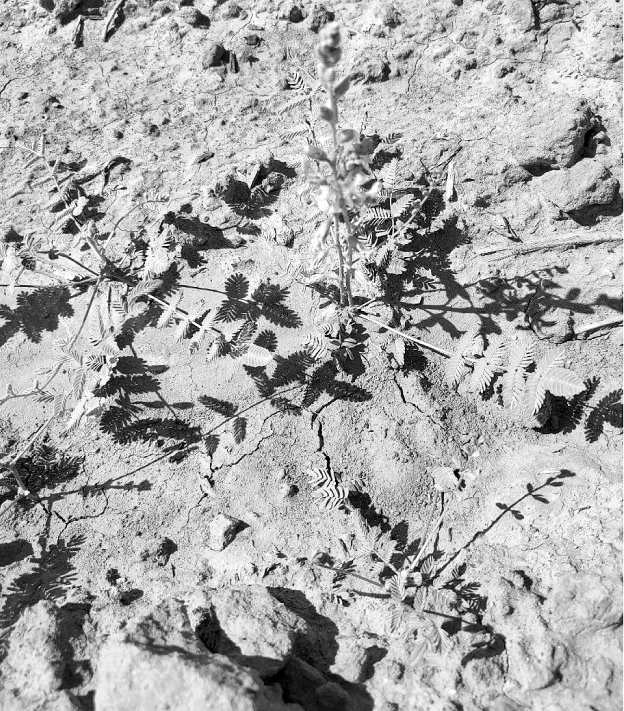
WEED OF THE WEEK Hog Potato, (image to the right) aka Indian Rushpea
Hoffmannseggia glauca
(Ortega) Eifert Fabaceae (Legume Family)
• Creeping perennial native plant in the Legume (Bean) Family
• Produces creeping roots and short, relatively unbranched stems growing 6-12” tall
• Leaves are bipinnately compound, dark green, with many slender leaflets
• Flowers are bright orange yellow on short, slender spikes
• Toxic to livestock if grazed, but usually not grazed
• Found commonly in sandy, dry soils of western Midwest in prairies, range on roadsides; common in West Texas cotton fields West Plains IPM Update is a publication of the Texas A&M AgriLife Extension Service IPM Program in Hockley, Cochran, and Lamb Counties. Editor: Kerry Siders, Extension Agent-IPM Contact information: 1212 Houston St.,Suite 2, Levelland, TX 79336 806) 894-3150 (office), 638-5635 (mobile) ksiders@tamu.edu (E-mail)