
AgriLife Extension district reporters compiled the following summaries:
Rolling Plains
Ongoing dry conditions and above- average temperatures stressed the wheat crop across the district. Farmers reported widespread reduced soil moisture levels, raising concerns about potential yield impacts. With little rain in the forecast for the upcoming week, wildfire threats increased.
South Plains
Subsoil and topsoil moisture levels were short, with no measurable rainfall for several weeks. Windy conditions were expected to worsen the situation. Much of the leftover forage from last summer was depleted due to poor winter wheat grazing. Cattle remained on supplemental feed and were in good condition, but rangeland growth struggled with extreme dryness.
Panhandle
Conditions improved for small grains and other cool- season crops, with daytime temperatures reaching the mid-60s to mid-70s and overnight lows in the upper 20s and low 30s. Topsoil moisture reserves gradually declined in dryland production areas. Field preparation for warm-season crops increased. Irrigation began on wheat and summer cropland. Overall, soil moisture ranged from short to adequate. Pasture and rangeland conditions ranged from very poor to fair.
West Central
Weather conditions were near normal, with temperatures climbing and a slight chance of rain in the forecast for the following week. The area remained dry and warm throughout the week, with cooler temperatures arriving at the end. Drought conditions worsened, and soil moisture levels remained very low. There was zero moisture, and temperatures rose into the 70s after being in the teens the previous week. Supplemental feeding continued due to very dry conditions. Some areas saw daytime temperatures close to 90 degrees, while nighttime temperatures stayed in the 40s. Topsoil moisture continued to decline, and subsoil moisture ranged from decent to dry. Forage growth for coolseason crops slowed drastically due to dry weather, and field preparation for spring forage planting occurred. The last cold snap severely impacted small grain crops, with oats turning completely brown. Some producers pulled cattle off wheat due to a
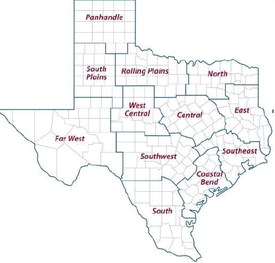
A map of the 12 Texas A&M AgriLife Extension Service districts.
lack of grazing. Rain was needed before sorghum and cotton planting. Pastures had little to no grazing, and livestock diets were supplemented. Stock tank water levels were dropping. Sale volumes at local sale barns were lower, and prices were steady to higher. Some ranchers culled older cattle and held onto heifers.