
WEST PLAINS IPM UPDATE

SPECIAL EDITIION: Mozena Obtuse Plant Bug
July 12, 2022
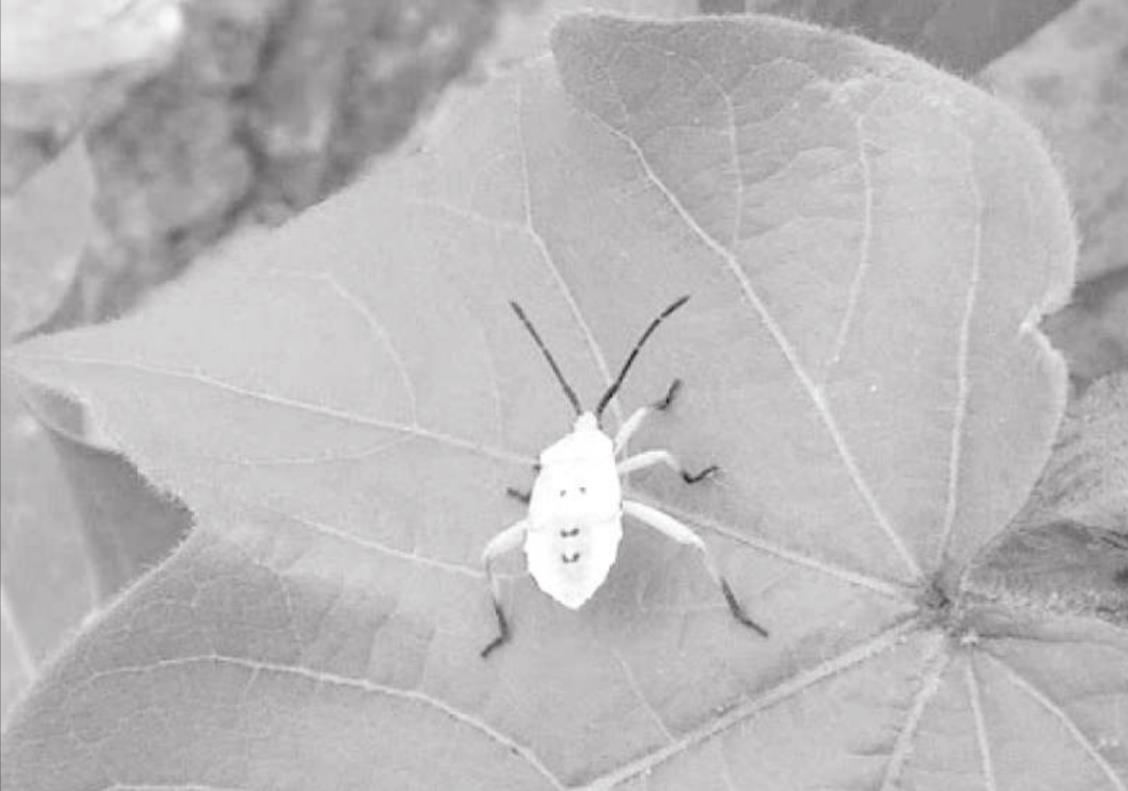
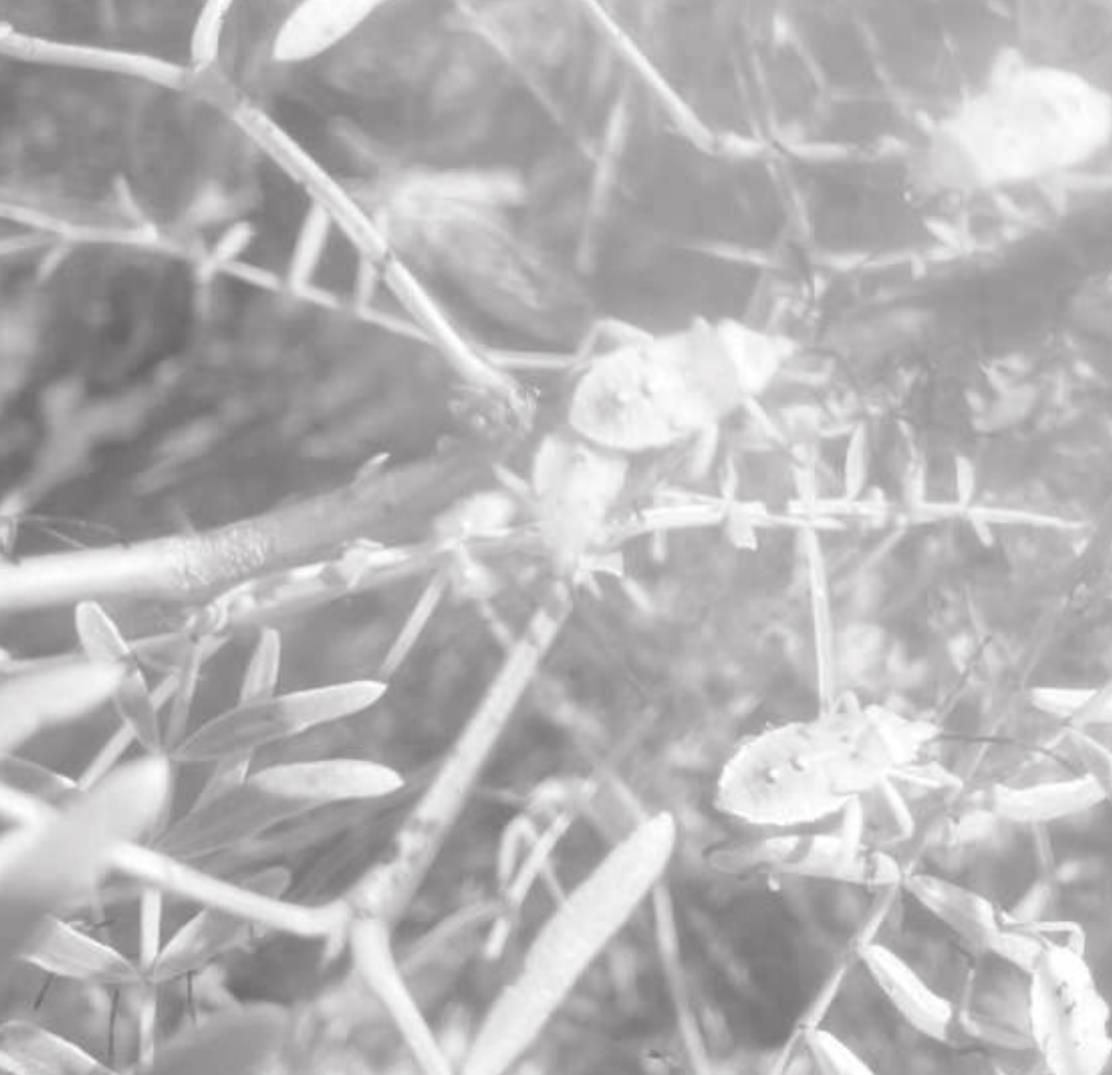
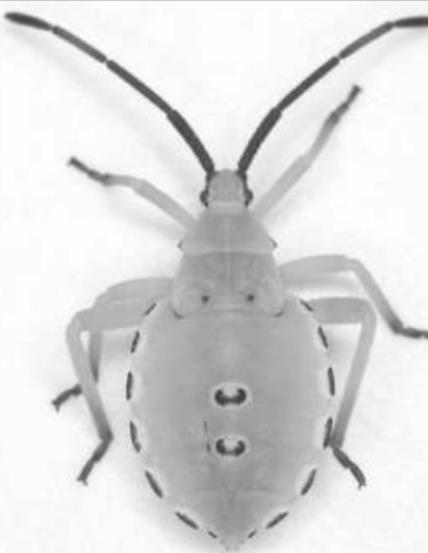
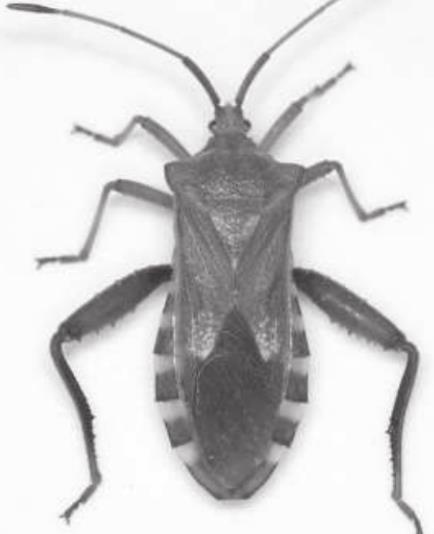
Over the last 24 hours I have received several calls about “a bug” that is being found in extremely high numbers. A majority of these inquires are coming from the southwest portion of Hockley County particularly near Sundown. So, this “bug’ is a true bug known as Mozena obtusa Uhler plant bug. If you might recall we dealt with this insect back in August of 2014, mostly out in Cochran County then. The Mozena plant bug is in the family Coreidae, which a group of insects given the common name of leaffooted bug.
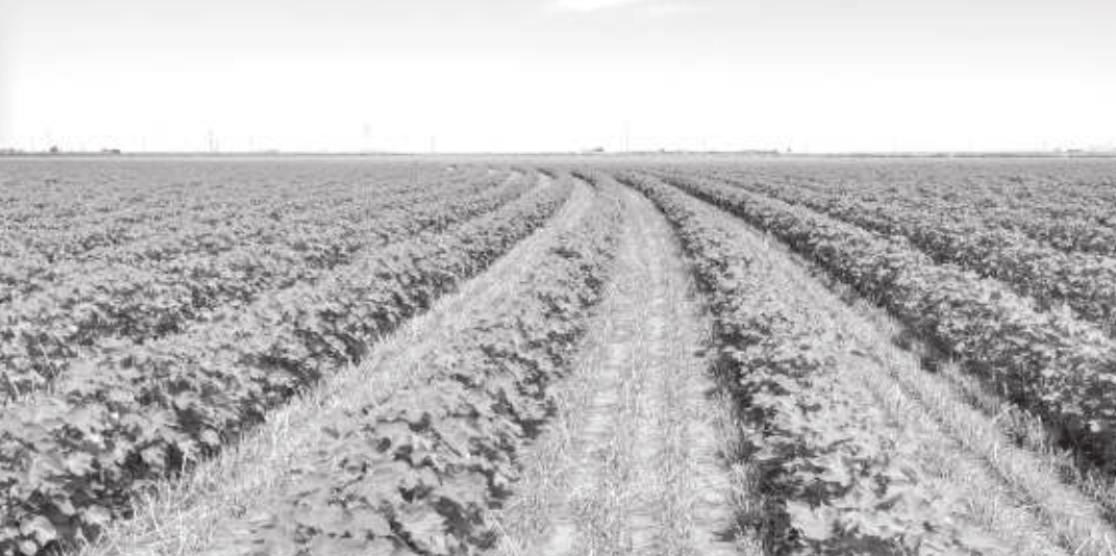
The common thread from 2014 to 2022 is our drought conditions. A couple other things: this insects’ primary host is mesquite, a legume. They feed on the beans. Dr. Pat Porter documented feeding on peas and corn in 2014. I noted them in cotton back in 2014, but not the sheer numbers I am seeing now, and it is a month earlier. Reports from Midland and Odessa area indicate high populations there as well. All of this said, how important is this insect? Honestly in the numbers I have seen in cotton (+20 per cotton plant of the immature) occupying all parts of the plant, I am concerned. As evidence to support this concern is a particular field I scout weekly. Last week square set was perfect at 100% after the first 12 days of squaring. Then this week it dropped to 79%. No other insects, drip cotton, good moisture, no environmental event to point finger at, and yet missing squares not present to dissect to determine possible cause of death.
One thing observed in this example I use is we did not find egg masses. Were these immature plant bugs hatched in this field or did they crawl. Understand, immatures do not have functioning wings yet. They can travel quickly on the ground though. This insect is often treated like a stink bug; however, stink bugs typically do not feed on cotton squares but rather bolls. I would treat them more like a Lygus when they are present in these numbers (+5 per plant). Although not as damaging as a Lygus would be at these numbers. Dr. Suhas Vyavhare did put out an insecticide trial this morning (7/ 12/22) to see what works best. Typically, a pyrethroid would be considered first, but concern about flaring aphids always enters the picture. I will keep you informed of the results.
Homeowners are calling about this insect as well. The most effective insecticides are the pyrethroid based products. Some examples of pyrethroid active ingredients include: bifenthrin, lambda-cyhalothrin, permethrin, cypermethrin and cyfluthrin. Insecticides, including organic products work best against the nymphal stages so frequent scouting of host plants is recommended to detect early stages of an infestation. When using an insecticide read and follow label directions for safety precautions, rates and preharvest intervals.
If you have questions, feel free to call.
July 14, 2022 Cotton ranges from 7 true leaves just starting to square to 16 total nodes with 1.2 first position bolls and 7.2 nodes above white flower. Square set continues to be in the mid 90% range. Blooming cotton is the exception not the rule right now. Cotton is going into bloom with 7.8 nodes above white flower (NAWF), which provides a projection for most acres to bloom near July 25. The heat, if it continues, will drive cotton plants to bloom sooner, lowering this value of going into bloom to less than 6- 7 NAWF. If temperatures would moderate, making irrigation go further, and we have our fertility in place to encourage continued growth (vegetative and reproductive) then we can maintain a good yield expectation. Ideally, we would not get to 5 NAWF until August 5th. If a plant does go to 5 NAWF too soon it will not achieve its full potential and take advantage of the full season. I always try to stress that we make cotton in August. Priorities for the next few weeks: 1. Water as efficiently as possible (deliver water near to the ground). If heat continues, do not share water by towable systems, or shared wells. Cut back to your best. 2. Get fertilizer out now, there
is no advantage of waiting. It only delays progress and maturity.
3. Continue PGR applications if you have good water, fertility, and a well developing plant. Otherwise, wait till temps moderate and then resume PGR plans.
4. Scout, scout, scout! Do not let insects rob you of precious fruit.
Lygus bugs
There are three predominant species of lygus in Texas cotton: the western tarnished plant bug, the tarnished plant bug, and the pale legume bug. The western tarnished plant bug is the most common species in the western half of Texas, and the tarnished plant bug dominates in the eastern half of the state. These species are similar in appearance, biology, and the damage they cause. In this publication, we will call them lygus and discuss them as a single pest.
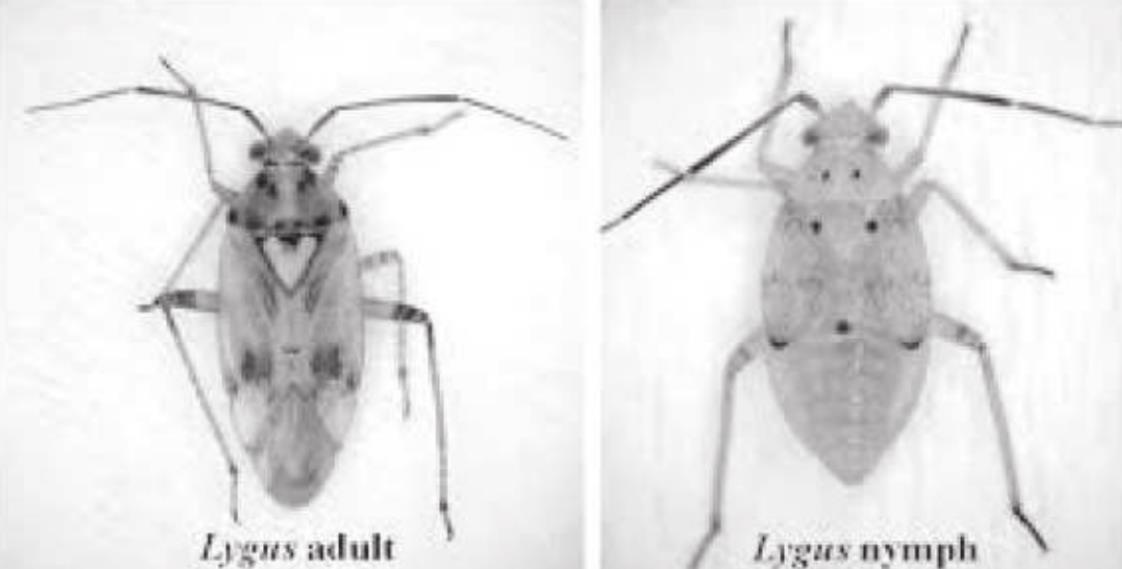
Lygus bugs feed on cotton terminals, squares, f lowers, and small bolls. Adults are 1/4 inch long, have a conspicuous darkcolored triangle in the center of the back, have wings, and vary from pale green to yellowish brown with reddish brown to black markings are uniformly pale green with red-tipped antennae; late instars have four conspicuous black spots on the thorax and one large black spot near the base of the abdomen. The nymph’s wings are not developed, but they can move rapidly and are difficult to detect in cotton foliage. It is easy to mistake small nymphs with aphids, cotton fleahoppers, and leafhopper nymphs, but their broader shape, quick movements, larger size, and the specific characteristics discussed above help differentiate them.
Lygus bugs prefer legumes to cotton and usually occur in large numbers in alfalfa, potato fields, or on wild hosts such clovers, dock, mustard, pigweed, Russian thistle, vetches, and wild sunflower. Lygus bugs are attracted to succulent growth. In cotton, their feeding causes:
• Deformed bolls
• Dirty bloom (damaged anthers in blooms) and puckered areas in petals
• Shedding of squares and small bolls
• Stunted growth
• Small black spots or small, dark, sunken lesions on the outer surface of the developing bolls that can penetrate the boll carpel wall and damage developing seeds or lint
Scouting and decision making
The abundance of lygus bugs in relation to the fruiting condition of the cotton plants determines the need for control measures. Inspect fields for lygus bugs at 4- to 5-day intervals throughout the fruiting period. Before peak bloom, using a sweep net is the most accurate way to sample for lygus. After peak bloom, a drop cloth is best.
West Plains IPM Update is a publication of the Texas A&M AgriLife Extension Service IPM Program in Hockley, Cochran, and Lamb Counties. Editor: Kerry Siders, Extension Agent-IPM Contact information: 1212 Houston St., Suite 2 Levelland, TX 79336 (806) 894-3150 (office), 638-5635 (mobile), or 897-3104 (Fax) ksiders@tamu.edu (E-mail)