
WEST PLAINS IPM UPDATE

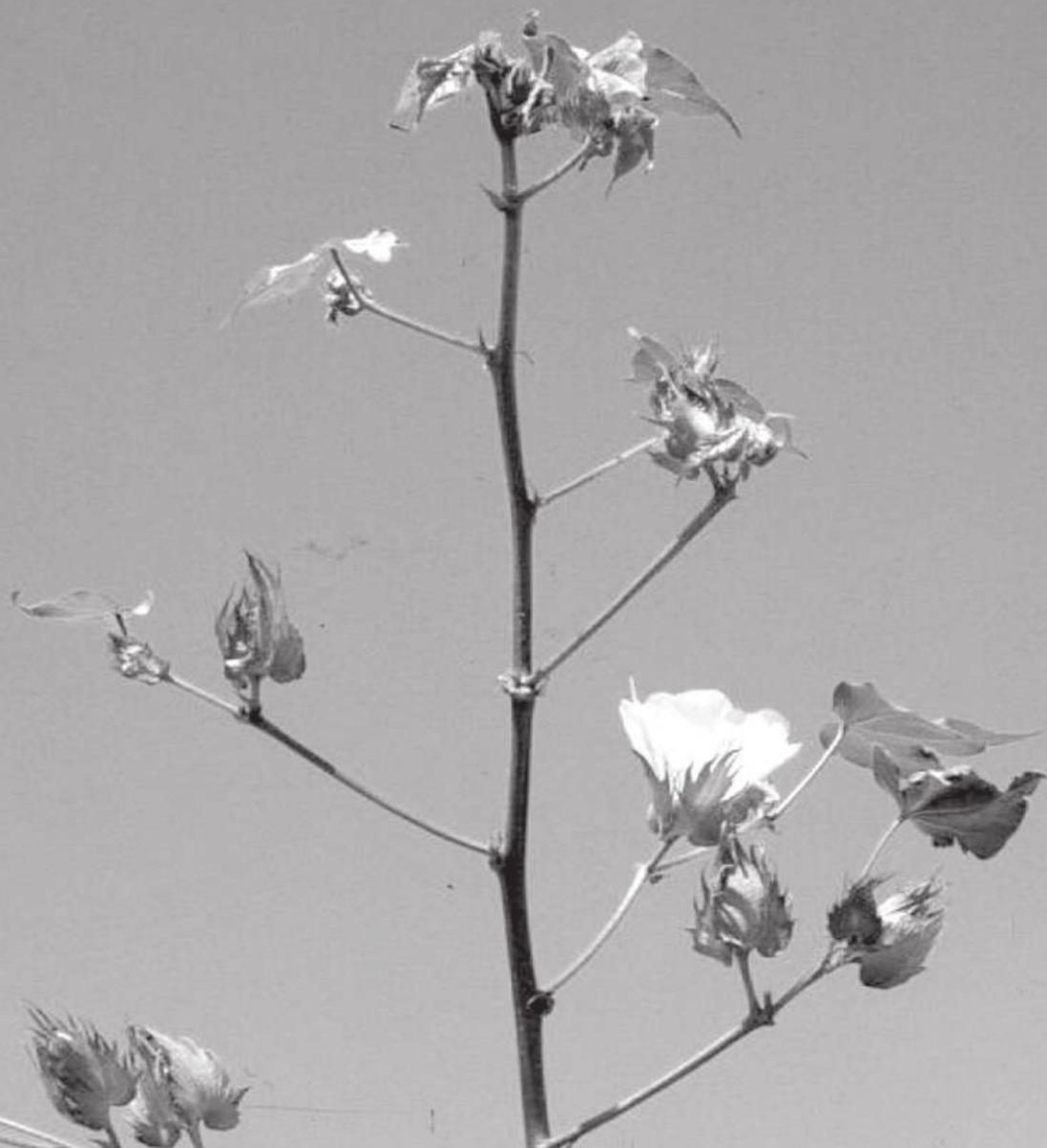
In general, insect pests are very far and few between in field crops. I am not seeing cotton fleahoppers except on weeds, and mostly in field margins as adults. This is supported by the fact that our cotton square retention is running better than 90%. The lowest square retention I’ve seen is in the mid 80% range on near blooming cotton, and the missing squares are most likely because of a wind event. I am seeing an occasional terminal cluster of cotton aphids on less than 1% of plants. I do not get too overly excited about this. You spend enough time looking at cotton you will eventually find/see most everything. In fact, these aphids will provide fodder for beneficials to feed on and establish themselves in a field. Hopefully these beneficials will assist with further pest management of aphids and other insect pests. I am not finding cotton bollworm egg laying or any subsequent larvae this week as in previous weeks. I continue to see various moth species working fields early in mornings and evenings, but no issues todate. I do see moderate whorl feeding on early planted grain sorghum. This feeding at most has been on near 60% of plants and less than 10% of the foliage has shot hole feeding. This alarms producers but understand that this feeding in the whorl rarely results in any impact on yield. Most of this feeding is from fall armyworms. Besides, it is near impossible to treat whorl feeding worms. Typically, they cycle out just prior to boot. Some of these same worms can occasionally be found in peanut fields feeding on foliage as it is developing causing this same shot hole effect. I am seeing less than 1 worm per linear row foot of peanuts currently. It would take more than 7 for me to even consider treating. So, there are insect pests which need to be monitored on regular basis, but nothing to sound the alarm about.
CROP SITUATION
Cotton growth and development update based on irrigated IPM Scouting Program fields (25) looks like this:
• 6.5” height (range 3.75”- 12.0”)
• 10.8 total nodes (range 6.0 – 16.0)
• 0.6” per internode length (range 0.5”- 0.8”)
• 1st fruiting branch at node 6.5 (range 5.6 – 8.2)
• 4.6 first position squares (range 1 – 3 boll w/ 5.8 NAWF)
• 94% square retention (range 86%-100%)
• Going into bloom with 7.8 nodes above white flower (NAWF)
COTTON PLANT GROWTH REGULATOR USE
Looking at these cotton growth stats the average plant is not growing in excess such that it will “overshoot the runway” you might say. However, there are a few acres on the more growthy end of the spectrum which needs and has needed some plant growth regulation via mepiquat chloride or “Pix” type products. Currently I have a few fields where we have already accumulated 16 ounces of a PGR. The internode length and knowing the growth potential of a particular variety is driving the decision making currently. Also, irrigation capacity and fertility to some extent.
Categorization of Cotton Variety Growth Potential: Low, Moderate, and High
PGR (mepiquat chloride) rates based on growth potential:
• Low – last week June to first week July (before 1/3 grown square) if average node length is greater than 1” apply 4 oz; check every two weeks and apply 4-8 oz if top 4 internode length average exceeds 1.5” until mid August (total accumulation of 0-28 oz possible).
• Moderate – at matchhead square apply 8 oz; two weeks later apply 12 oz; and 2-3 weeks later apply 16 oz (total accumulation of 36 oz).
• High – at matchhead square apply 8 oz; two weeks later apply 16 oz; and 2-3 weeks later apply 24 oz (total accumulation of 48 oz or legal maximum).
The above are suggestions for use. Always read and follow label instructions. If you have any questions give me a call.
West Plains IPM Update is a publication of the Texas A&M AgriLife Extension Service IPM Program in Hockley, Cochran, and Lamb Counties.
Editor: Kerry Siders, Extension
Agent-IPM
Contact information:
1212 Houston St., Suite 2
Levelland, TX 79336
(806) 894-3150 (office), 638- 5635 (mobile), or 897-3104 (Fax)
ksiders@tamu.edu (E-mail)