
This past week, Chairman Jodey Arrington (TX 19) secured passage of amendments to defund the Muleshoe wildlife refuge expansion and defund the rule to regulate Texas ag and energy producers out of business.
Arrington introduced amendments to the Department of the Interior, Environment, and Related Agencies Appropriations Act, including to defund the United States Fish and Wildlife Service’s (USFWS) proposed expansion of the Muleshoe National Wildlife Refuge from 6,400 acres to 700,000 acres and to defund the United States Fish and Wildlife Service’s (USFWS) rule to use an endangered species designation of several types of freshwater mussels to federalize over 1,500 miles of Texas rivers.
“I rise to offer an amendment to defund the U.S. Fish and Wildlife Service’s plan to expand the Muleshoe Wildlife Refuge by an unprecedented 1,000%,” said Arrington.
The Muleshoe refuge expansion plan included the counties of Lamb, Bailey, Palmer, Castro, Yoakum, Lubbock, Hockley, Cochran, Hale, Gaines, Dawson, Garza, Lynn, and Terry Counties in Texas; and Lea, Chaves, Roosevelt, De Baca, and Curry Counties in New Mexico.
“At a time when we have the highest level of indebtedness in the history of nation, while we spend almost a trillion dollars in interest to service the debt, the last we need to do is spend money to buy up more land to somehow either appease an environmental group or maybe just achieve what seems to be an odd objective - having the federal government own and operate a third of our land.”
Previously, Arrington stated he had concerns over the expansion. Arrington said, “I’m a strong proponent of property rights, but once a landowner makes a deal with the devil, they can’t turn back the terms.” “I would seriously caution the landowners in that area doing any deal with the federal government.”
He also was not supportive of the use of federal conservation easements because of their permanent “static” protection of the land and cautioned landowners from signing one.
The primary problem with conservation easements is that they willingly convey control of the property to a third party, rendering the fundamental right of “private property” void. Control of the land is the essential element of a property right, but when a landowner signs a conservation easement, they give this away.
Additionally, he sent a letter to the U.S. Fish and Wildlife Service requesting answers to key questions about the expansion.
Texas Farm Bureau (TFB) offered its support of the amendment, with TFB President Russell Boening saying, “Texas farmers and ranchers are the original stewards of our land and resources and have a great appreciation for conservation. Texas Farm Bureau prioritizes private property rights and believes landowners should have the ability to choose how they manage their own property.“ “Therefore, we have concerns about the U.S. Fish and Wildlife Service’s plan to increase the federal footprint in West Texas by significantly expanding the Muleshoe National Wildlife Refuge. The expansion poses serious concerns for farm and ranch families in the impacted area. Texas Farm Bureau supports Congressman Jodey Arrington’s amendment to challenge this plan, and we thank him for taking the lead on this issue.”
Plains Cotton Growers Inc. (PCG) President Travis Mires also came out in support of the Arrington amendment, saying, “Farmers across the High Plains and Southern High Plains of Texas cherish our land as we work hard to produce high quality fiber for the U.S. and world. PCG strongly supports property owners’ rights to manage their land as they see fit. We appreciate Chairman Jodey Arrington’s action to mitigate this plan until a more mutually beneficial solution can be developed that protects private property rights and the rural communities that would be impacted by this initiative.”
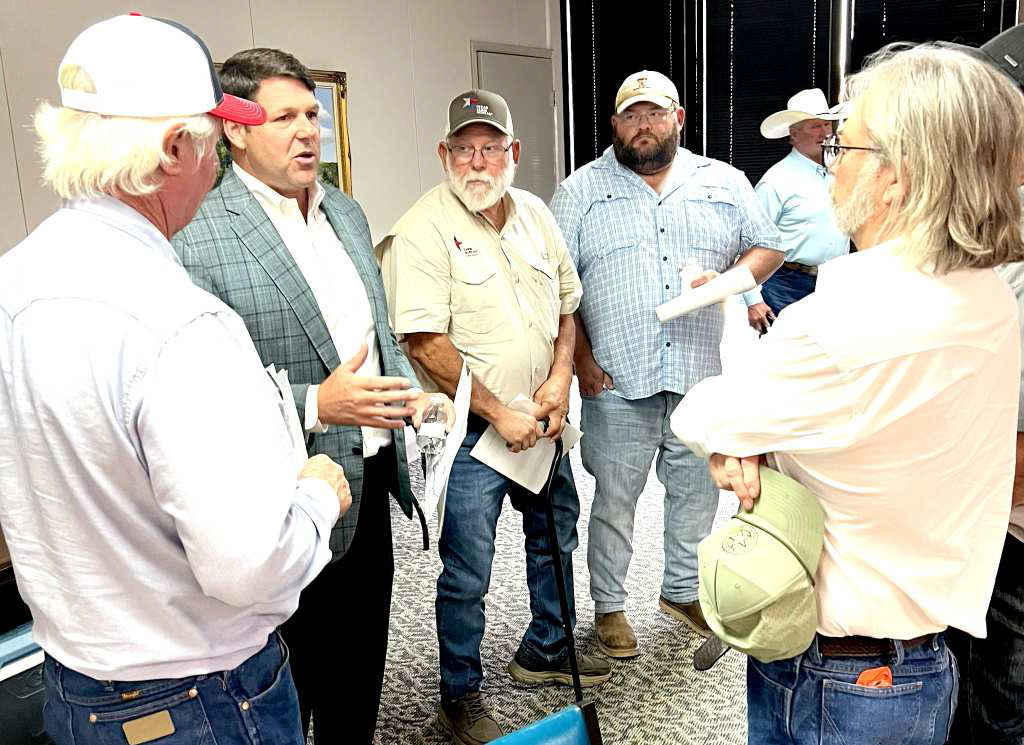
Since the U.S. Fish and Wildlife Service (USFWS) finalized its plan to expand the National Muleshoe Wildlife Preserve, Arrington has been in close communication with the House Natural Resources Committee and USFWS; met with Muleshoe residents who will be affected; and demanded answers from USFWS regarding its proposed plan. “I enjoyed visiting my friends in Muleshoe, Texas about the Biden Administration’s plans to “ voluntarily” expand the Muleshoe National Wildlife Refuge by 1000% from 6,500 acres to 700,000 acres. The principles that guide my position on this are as follows: - protecting property rights - preventing federal overreach - promoting ag and energy restoring fiscal responsibility By all accounts above. I’m a NO,” said Arrington.
Additionally, Arrington spoke out on the United States Fish and Wildlife Service’s (USFWS) rule to use an endangered species designation of several types of freshwater mussels to federalize over 1,500 miles of Texas rivers.
“The critical habitat that I’m concerned most about is Rural America - the backbone of this country, the breadbasket and the energy basin that’s feeding, clothing, and fueling America,” said Arrington.
“The Biden administration has decided to list six freshwater mussel species that - in their own report, in their own words - is moderately healthy, and, in doing so, jeopardize the livelihoods, the way of life, and the tremendous contributions of our ag and energy producer and lock up 1,500 miles of rivers.”