
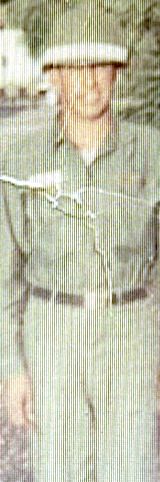
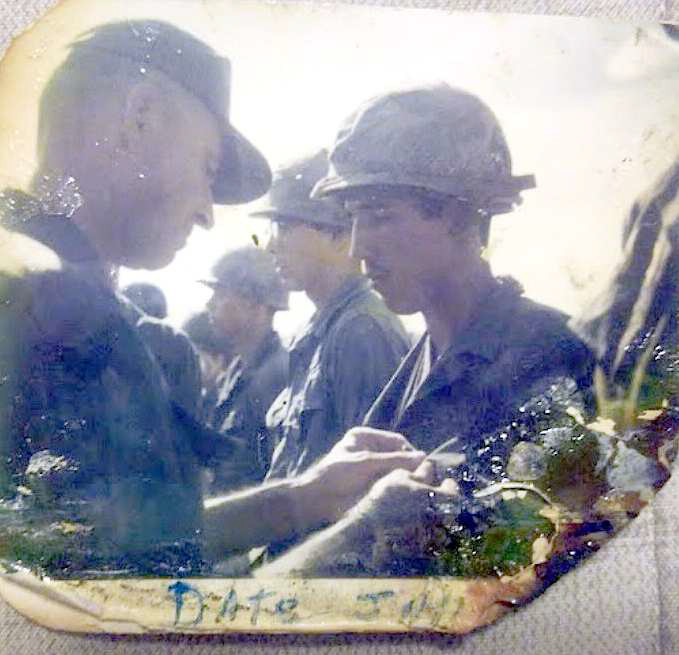
The year was 1969, Rigoberto “Robert” Rivas was drafted to the Vietnam War on July 16.
The Vietnam War began in 1955 and concluded in1975. Rivas survived two gunshot wounds while in combat but felt defeated when he returned with no welcome home acknowledgment.
“Everybody calls me Robert, it’s a nickname,” Rivas said.
While in the process of getting drafted, Rivas learned his name was not Robert but instead Rigoberto. At home they called him Beto and at school Robert. A former teacher took a look at his name and gave him the nickname.
“ I didn’t know until I got drafted,” Rivas said.
After speaking to the Muleshoe Draft Board, Rivas was drafted in Washington State. Ultimately the board decided to have him stay in Washington to get drafted through the board of Yakima Washington to avoid him having to travel back to Texas.
He was shipped to Seattle. Rivas was bussed to Fort Louis for basic training and advanced individual training.
The worries of leaving school to go to war did not pose an issue to Rivas.
“I wanted to work,” Rivas said.
He dropped out before the war began. His reason was because he was not doing well in school, he later discovered it was a “big mistake.” Eventually Rivas got his GED while in the Army.
After training Rivas returned home for 14 days before hopping on a plane and being flown to a base in California, he said. From there, it was stops in Alaska, Guam, then finally Vietnam.
“About a year and six or seven months,” Rivas said was how long he spent serving.
In combat Rivas thought he received the “million dollar wound.”
He was shot twice during his time in the Army. New to the country and only there for about a week, Rivas was shot in the shoulder. After enemies shot down a helicopter transporting the wounded, Rivas went to help. Focused on helping those in the helicopter, Rivas was unaware of the chaos going on around him. His shoulder started hurting.
“I looked down with blood running on my shoulder,” Rivas said.
The bullet didn’t exit his body, and he was taken to the hospital on the next available helicopter.
“I thought I was going home, everybody kept telling me, ‘you’re going home, you got the milliondollar wound,’” Rivas said.
This meant it was a wound good enough to get you out of the country without it causing any permanent damage.
It wasn’t the million-dollar wound, he was given three weeks off and sent back to the field. The second wound happened in Cambodia.
“He fired one shot, and it went through my knee,” Rivas said.
He spent a week in Vietnam then traveled to Japan for surgery. He returned to the states and was based in Fort Bliss, Texas.
Robert Rivas was discharged January 14, 1971. He served for two and a half years.
“It’s horrible,” Rivas said about his time in the Vietnam War.
He recalled staying in the jungle carrying his 90 lb. rucksack filled with grenades, water, food and machine gun ammo.
“It’s bad – but when it really gets bad, it’s when you get into a firefight,” Rivas said.
While you couldn’t tell anyone was scared they were, he described.
“You’re scared – and you’re scared to death,” Rivas said.
When Rivas and others returned, people weren’t fond of the soldiers. They were called baby killers, thrown things and treated poorly. Fearful of poor treatment, Rivas would say no when asked if he’s ever been to Vietnam.
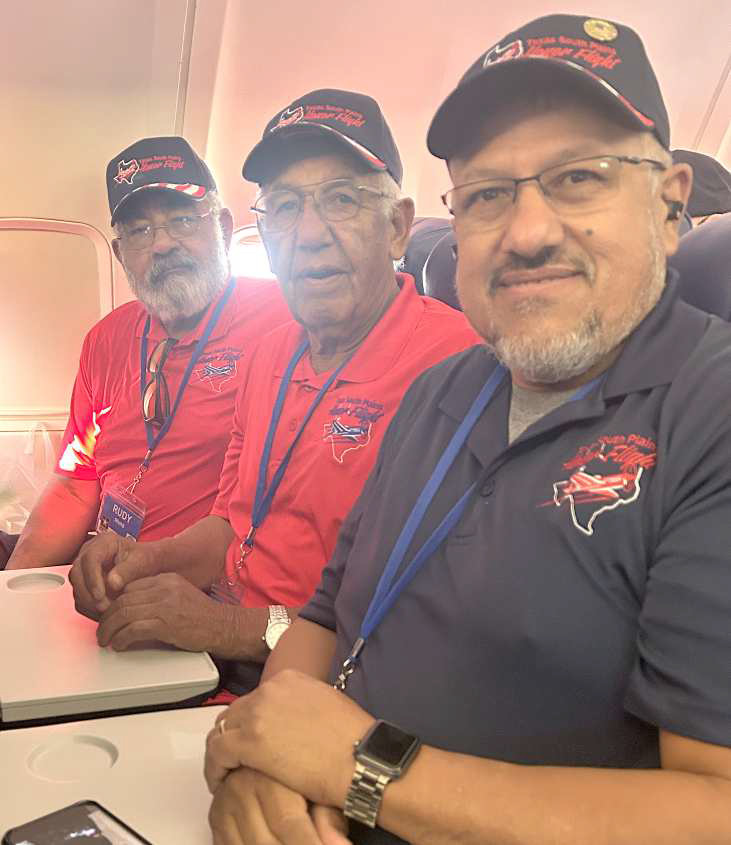
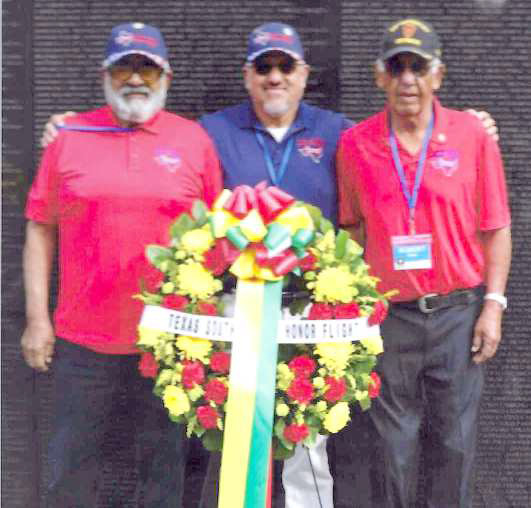
Recently, Rivas along with two of his brothers went on the South Plains Honor Flight in October.
“We never got our welcome home when we came back from Vietnam,” Rivas said.
The Honor Flight made up for it. He experienced the flight with his brothers, Aurelio Rivas and Mike Rivas. Aurelio followed his brother’s footsteps.
Aurelio “Rudy” Rivas is a retired veteran who served in Vietnam for two years. In hopes of receiving the “Mexican scholarship” better known as the GI Bill to continue his education, Aurelio volunteered hoping to join his brother in the Vietnam War, he said.
The Honor Flight flew the brothers to Washington, D.C.
Because of his service Aurelio joined Rivas on the flight. Rivas qualified for the flight a year before Aurelio but decided to hold off on it to experience it together.
Once there they visited the Pentagon, the Tomb of the Unknown Soldier, the Naval History and Heritage Command, and multiple academies in the span of a threeday trip, expenses paid for.
Their brother, Mike Rivas, didn’t
serve in the Vietnam War; he was only four at the time. “It was a chance of a lifetime to go as a guardian for both my two oldest brothers and it was an honor to do that,” Mike said.
Mike listened to the stories of veterans and described the trip as humbling. The decision to be his brother’s guardian was due to Mike being proud of them. They did the work so I wouldn’t get drafted and have the experience they did, he said.
Mike didn’t understand the big picture of them going to war.
“I was too young to realize what war was,” Mike said.
Mike talked about Vietnam with Rivas; Rudy rarely talked about it. Mike learned about their heroic roles.
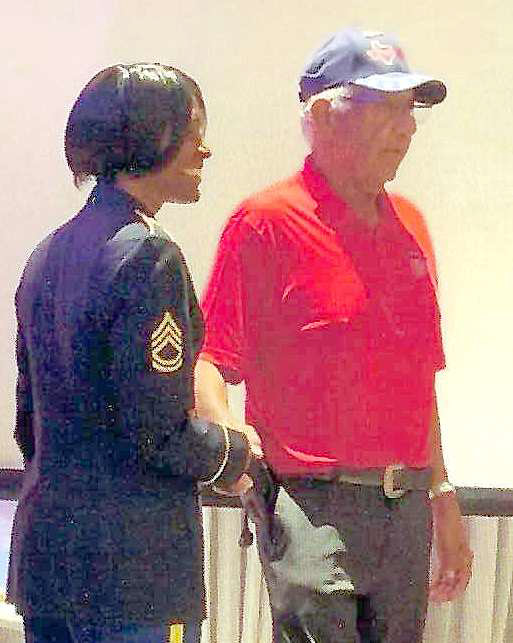
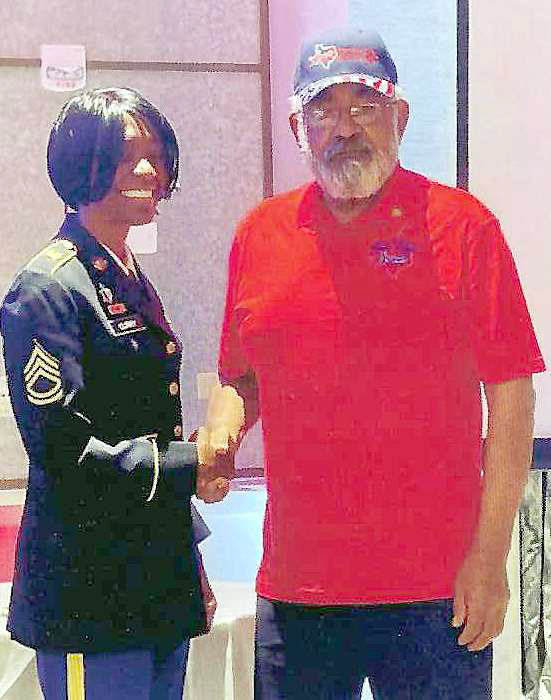
Rivas and Rudy didn’t get the welcome home they expected immediately returning from war. However, while on anytime the flight landed, there were people cheering them and other veterans on.
They got the reception that they deserved 50 years ago, Mike said.
For Rudy, seeing welcome signs and hearing music as he got off the plane felt good, he said.
“We didn’t have any kind of a welcome, but that was special,” Rudy said.
Rudy served from June 1970 to March 1972 On the flight, Rivas felt multiple emotions. As if he was waiting for this moment for a long time.
“ People here in the United States have no idea what the soldiers went through,” this made the flight more special to Rivas.